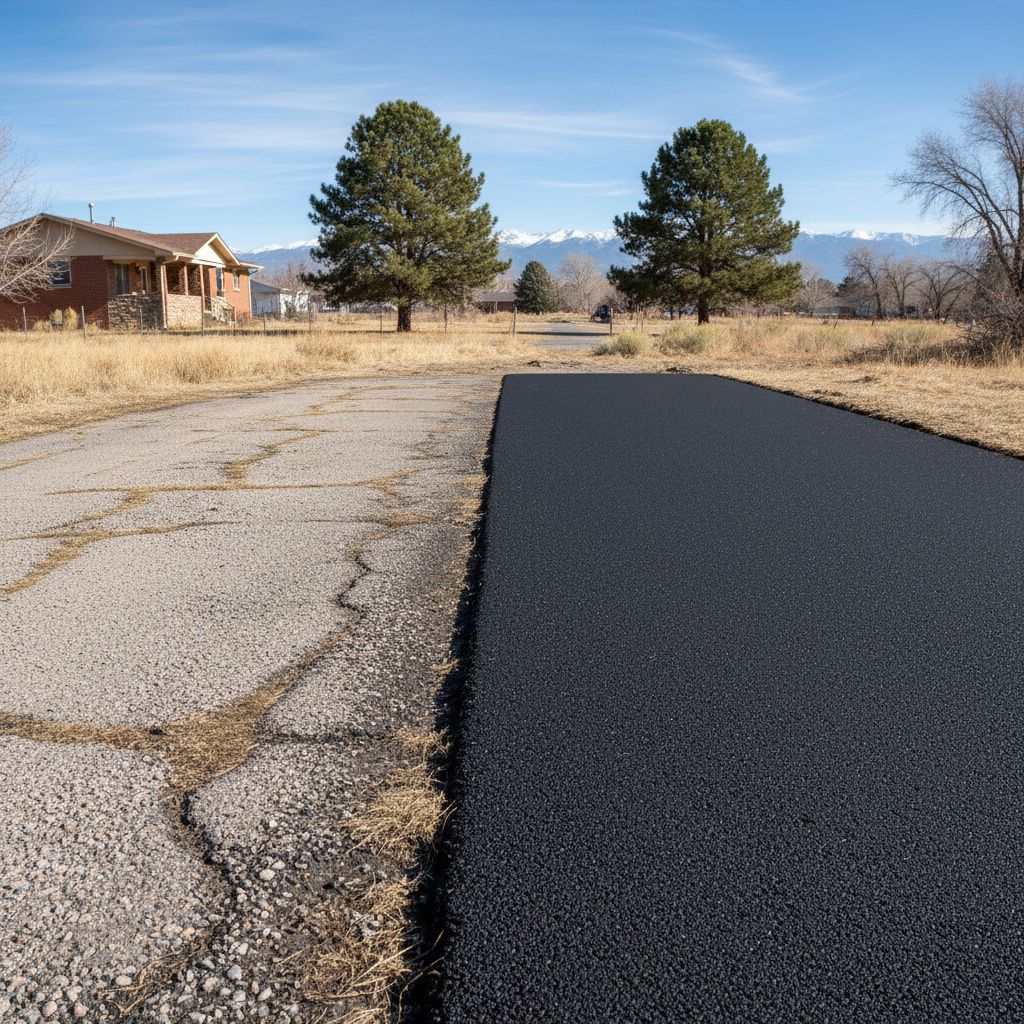
Your asphalt driveway is looking rough, isn't it? Cracks, potholes, maybe even some crumbling edges. You know it's time to do something, but what's the best approach? For most folks, it boils down to two main options: an asphalt overlay or a complete tear-out and replacement. I'm here to tell you what I've seen work and what usually doesn't, especially with our crazy Denver weather.
What's an Asphalt Overlay, Anyway?
Let's start with overlays. Think of an overlay as a fresh new skin for your existing driveway. We're not ripping out the old stuff. Instead, we'll clean and prep the surface – fill in the bigger cracks, fix any significant depressions, and make sure it's stable. Then, we'll lay a new layer of hot asphalt right on top of the old one, typically 1.5 to 2 inches thick. It's like giving your driveway a facelift.
The Good Side of Overlays
- Cost: This is usually the big one for homeowners. Overlays are almost always cheaper than a full replacement. You're saving on demolition, hauling away debris, and often on the amount of new material needed.
- Speed: We can get an overlay done a lot faster. Less time means less disruption to your daily life, and you'll have your driveway back in action sooner.
- Environment: Reusing your existing asphalt base is a bit greener. Less material going to the landfill, less new material being produced.
The Catch with Overlays
Now, here's where you need to be careful. An overlay is only as good as the foundation underneath it. If your existing asphalt is severely damaged – I'm talking about widespread alligator cracking, major heaving, or significant structural issues – an overlay is just putting a band-aid on a broken leg. Those underlying problems will eventually telegraph through the new surface. I've seen it happen too many times, especially with the expansive clay soils we have in areas like Stapleton or Green Valley Ranch. If the ground underneath is moving, a thin new layer won't magically fix it.
Full Driveway Replacement: The Whole Shebang
A full replacement is exactly what it sounds like. We come in, tear out every bit of your old asphalt, and often some of the base material too. Then, we'll assess and compact the subgrade, lay down a fresh, stable aggregate base, and finally, pave with new asphalt – usually two layers for a total of 3 to 4 inches thick. It's a complete reset.
Why Go for a Full Replacement?
- Longevity: This is where you get the most bang for your buck in the long run. A properly installed full replacement, with a solid base, can last 20-30 years, sometimes even longer with good maintenance. You're building from the ground up, so you're addressing any issues with the subgrade that might have caused problems before.
- Durability: With a new, thicker base and fresh asphalt, your driveway will be much more resistant to our freeze-thaw cycles, heavy vehicles, and general wear and tear.
- Curb Appeal: A brand-new driveway just looks fantastic. It's smooth, dark, and really boosts the appearance of your home.
- Problem Solving: If you've got drainage issues, major dips, or a crumbling edge that's beyond repair, a full replacement allows us to correct those problems properly from the start.
The Downsides of Replacement
- Cost: Yes, it's more expensive upfront. There's more labor, more material, and more disposal costs involved.
- Time: It takes longer. Demolition, base prep, paving – it's a multi-day process, and you'll be without your driveway for a bit.
So, What's My Recommendation for Denver Homeowners?
Here's the deal: if your driveway has minor cracking, some fading, and generally a solid, stable base underneath, an overlay can be a great, cost-effective solution. You'll get a few more years, maybe 7-10, out of it before you need to think about a full replacement. It's a good way to spruce things up without breaking the bank.
However, if your driveway is showing significant structural damage – big potholes, widespread spiderweb cracks (alligator cracking), areas that are sinking or heaving, or if it's just really old and brittle – then an overlay is throwing good money after bad. You're just delaying the inevitable, and those problems will resurface, often sooner than you'd like. In these cases, I always recommend a full tear-out and replacement. It's the more expensive option initially, but it's the right long-term solution for our climate, where temperature swings and soil movement can really wreak havoc on pavement.
You want a driveway that's going to stand up to those scorching summer days and the brutal winter freezes we get here in Denver. You don't want to be patching it up every year. When you call Advanced Asphalt Co, we'll come out, take a good look at your driveway, and give you an honest assessment of what we think is best. We'll explain why, and what you can expect from each option. No pressure, just good information so you can make the right choice for your home and your budget.