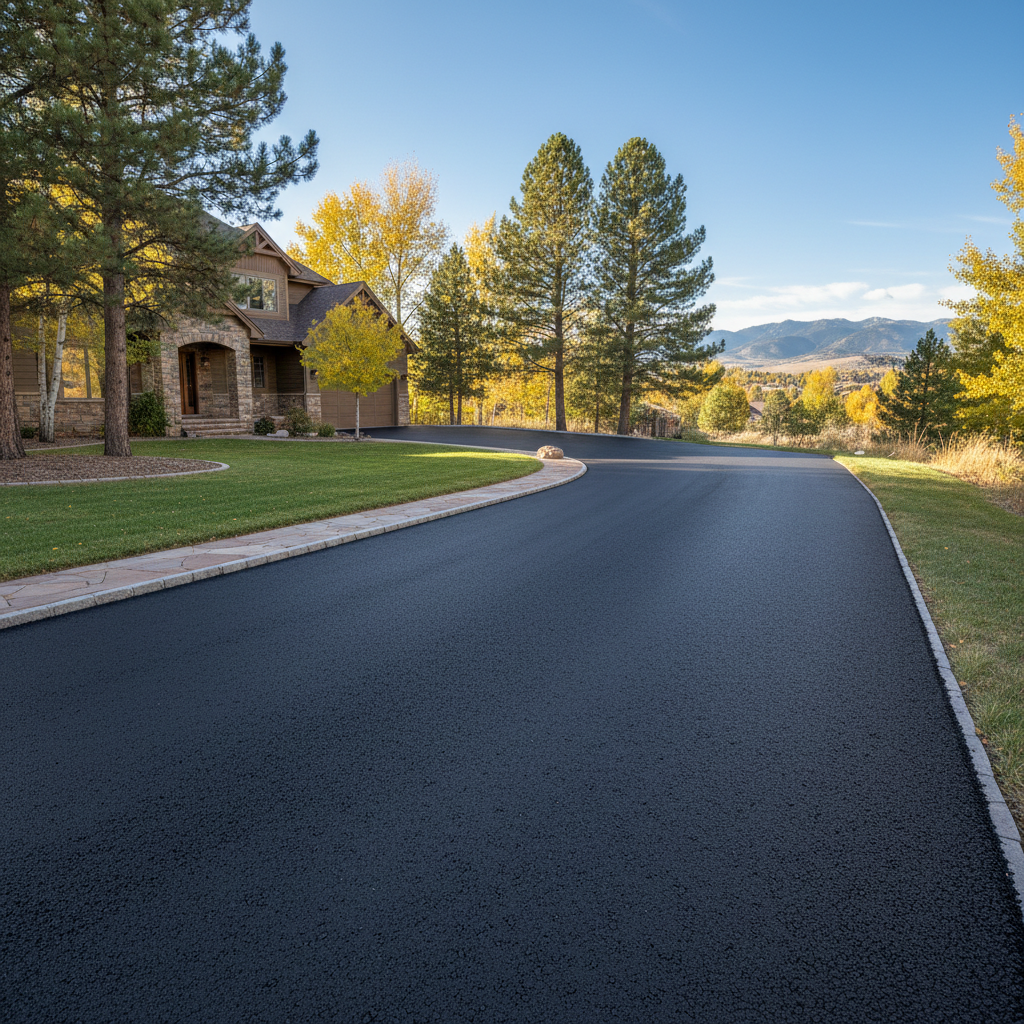
You're thinking about getting that driveway redone, or maybe putting in a new asphalt pad for your RV. That's great! A good asphalt surface adds value and curb appeal, and frankly, it just makes life easier. But I've seen enough botched jobs and frustrated homeowners over the years to know that it's easy to make some pretty common mistakes when you're not in the paving business. Here in Denver, with our crazy freeze-thaw cycles and expansive clay soils, those mistakes can really come back to bite you.
Ignoring the Foundation (It's Not Just About the Top Layer)
This is probably the biggest one. People see a quote for asphalt and they just look at the price per square foot for the black stuff. What they often don't realize, or don't ask enough questions about, is what's happening underneath. Your asphalt driveway is only as good as its base. If a contractor just throws a new layer of asphalt over a crumbling, poorly drained, or improperly compacted subgrade, you're going to have problems. Fast.
I've seen driveways crack and heave within a year because the homeowner went with the cheapest bid, and that bid didn't include proper excavation, grading, and a solid aggregate base. Especially in areas like Stapleton or other newer developments where the soil can be tricky, you absolutely need a good, stable foundation. Ask your contractor specifically about their base preparation. How deep will it be? What kind of material? How will it be compacted? If they gloss over this, that's a red flag.
Falling for the Low-Ball Bid Without Understanding Why
Everyone wants a good deal, I get it. But with asphalt paving, a significantly lower bid often means corners are being cut. It's not always obvious where. Maybe it's the thickness of the asphalt layer – a half-inch less than recommended might save a few bucks upfront, but it'll wear out years sooner. Or maybe it's the quality of the asphalt mix itself. There are different grades, and using a cheaper mix for a high-traffic area is a recipe for premature deterioration.
Another place they might skimp? Insurance and licensing. A legitimate, insured contractor like us at Advanced Asphalt Co. carries significant overhead to protect both our crew and your property. If a price seems too good to be true, it probably is. You don't want to be on the hook if an uninsured crew member gets hurt on your property, or if they damage your sprinkler system and disappear.
Not Getting Everything in Writing (And Being Specific)
Verbal agreements are worthless when something goes wrong. You need a detailed contract. And I mean detailed. It should specify:
- The exact scope of work: excavation depth, base material and thickness, asphalt type and thickness.
- Total square footage.
- Start and completion dates (or at least an estimated timeline).
- Payment schedule.
- Warranty information.
- Cleanup procedures.
Don't just sign off on a one-page quote that says